Get the latest Science News and Discoveries
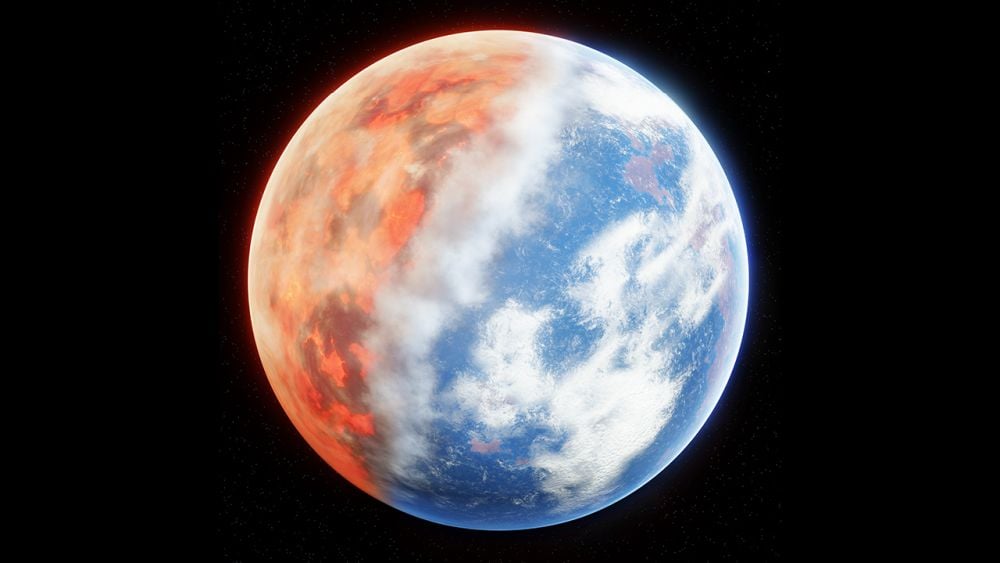
Why Most Exoplanets Are Magma Worlds
In astronomy, there is a concept called “degeneracy”. It has nothing to do with delinquent people, but instead is used to describe data that could be interpreted multiple ways. In some cases, that interpretation is translated into exciting new possibilities. But many times, when that happens, other, more mundane explanations are ignored for the publicity that the more interesting possibilities provide. That seems to have been the case for many “sub-Neptune” exoplanets discovered recently. Some theories have described them as Hycean worlds - worlds that are filled with water oceans or ice. But a new paper from Robb Calder of the University of Cambridge and his co-authors shows that, most likely, these planets are almost all made of molten lava instead.
None
Or read this on Universe Today