Get the latest Science News and Discoveries
The European Space Agency’s Hera mission for planetary defence has acquired its first close-up of the Didymos binary asteroid system
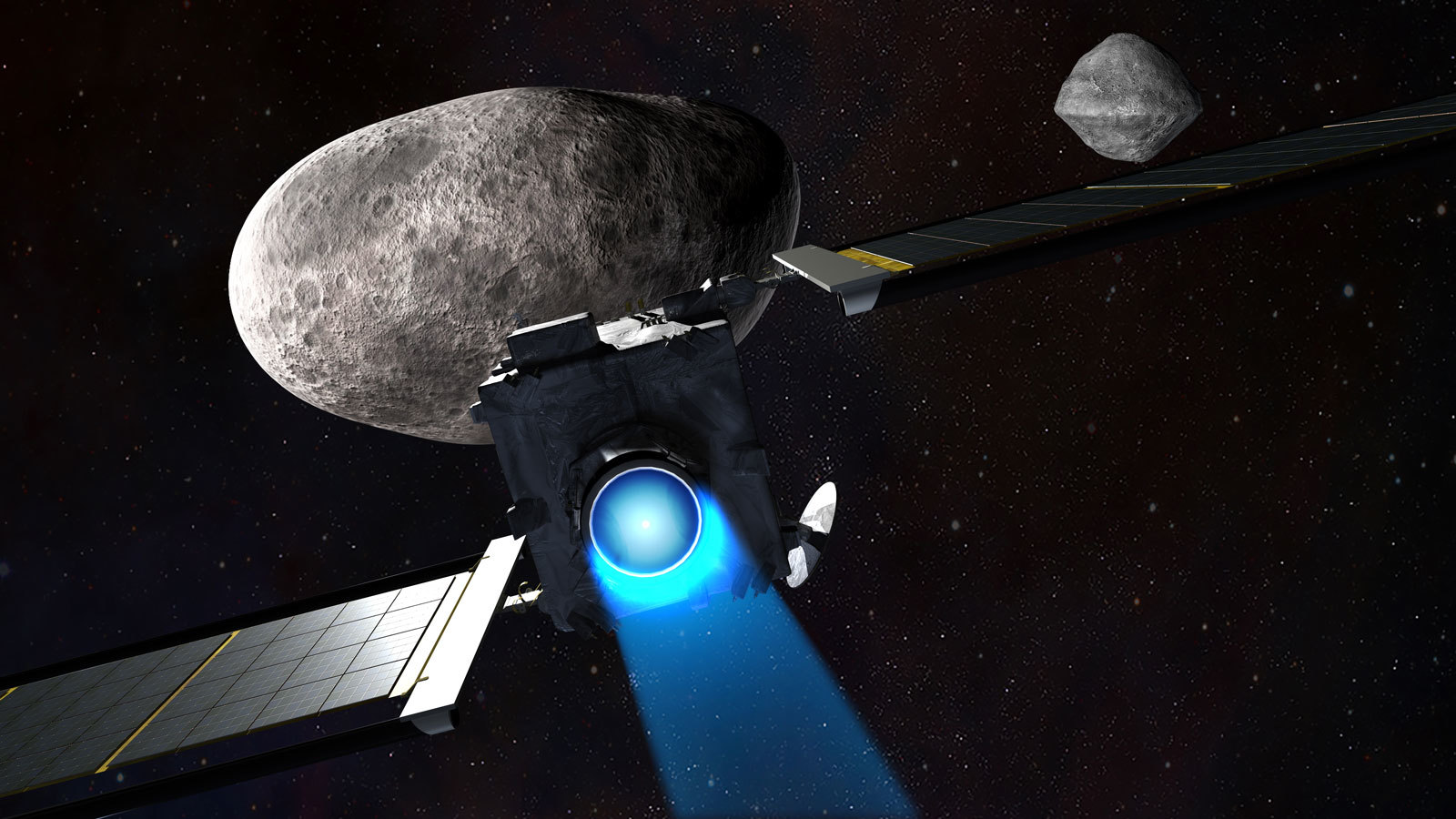
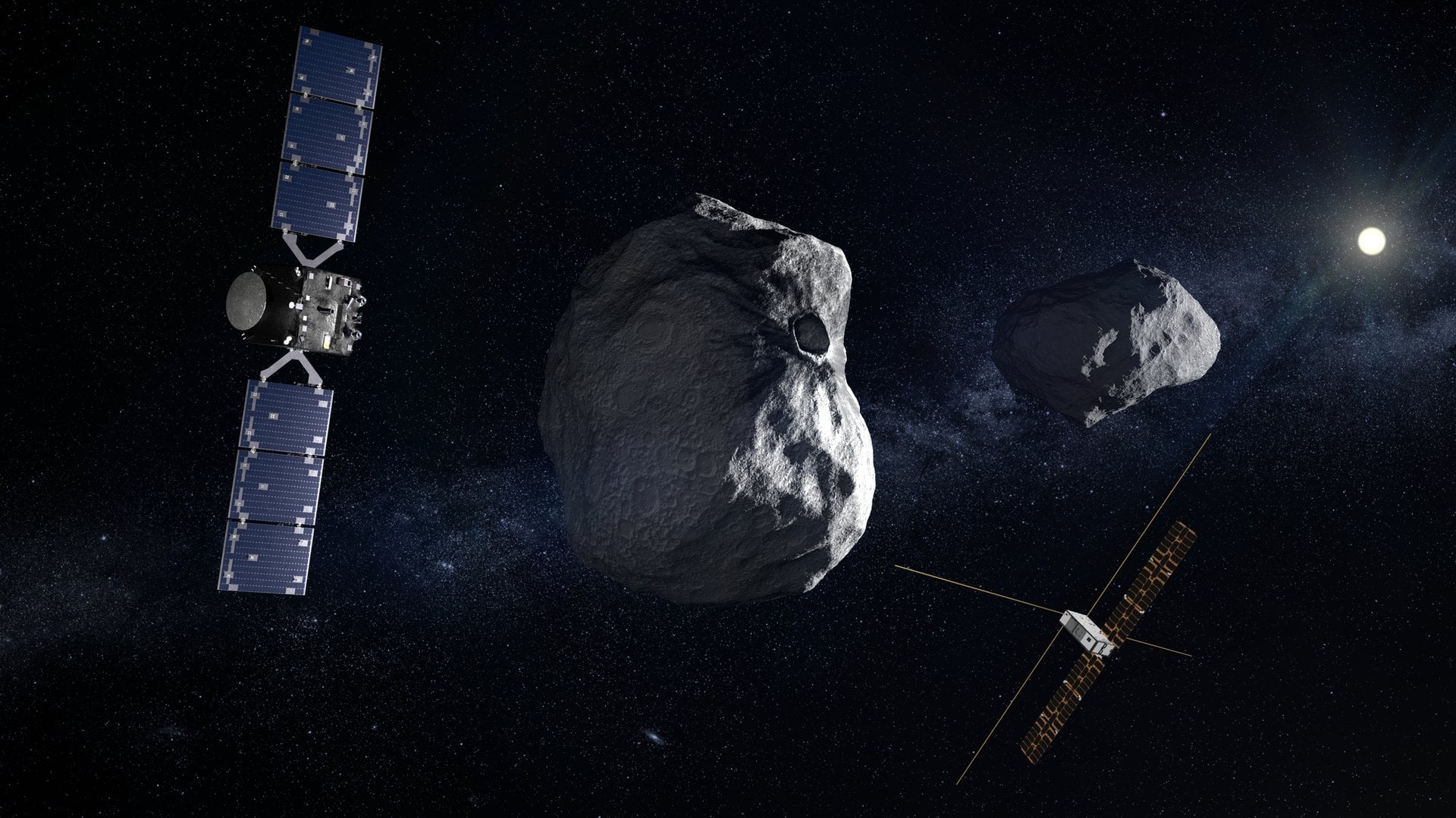
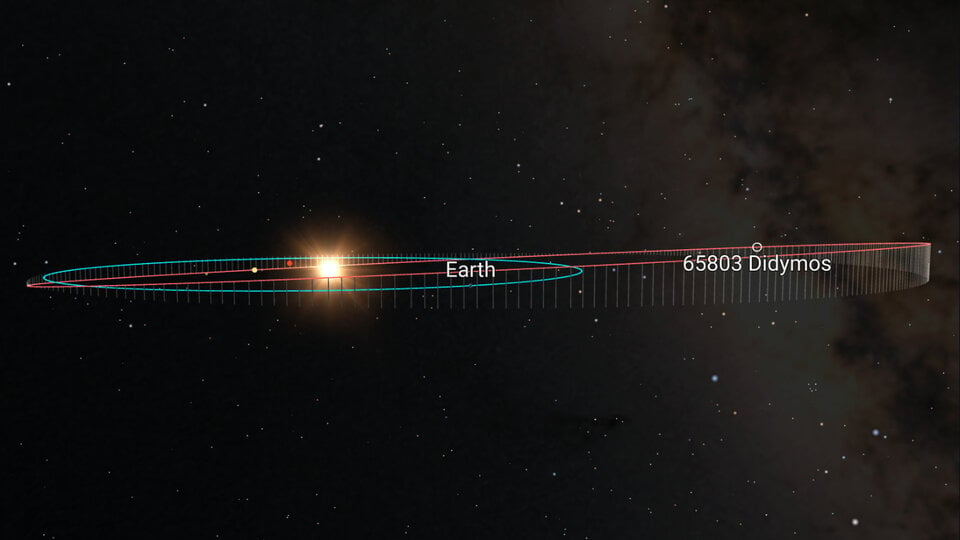
The final approach of the European Space Agency’s Hera mission for planetary defence to its target Didymos and Dimorphos asteroids, as seen through its main Asteroid Framing Camera, designed for both navigation and science.The first image making up this approach sequence was acquired on 5 October 2026 from 270 280 km away in space, with the Didymos binary asteroid system seen as a single bright point, circled in red. The last image was acquired on 27 October from just 360 km away.During the second half of October, Hera performed braking manoeuvres to reduce its velocity from more than 12 km/s relative to Earth down to near zero relative to the asteroids.the smaller 151-m-diameter Dimorphos asteroid is the first Solar System object to have had its orbit measurably changed by human action. Following the impact of the 580 kg DART spacecraft, moving at about 6.1 km/s, the orbit of Dimorphos was shortened around the 780-m-diameter Didymos asteroid by 33 minutes plus or minus a minute – a much higher change than was previously predicted.ESA’s Hera, after its two-year flight to these double asteroids – currently 196.8 million km from Earth – is about to perform a close-up ‘crash site investigation’. Hera’s discoveries will help turn the kinetic impact method of asteroid deflection from a one-off experiment to a well understood and potentially repeatable technique if ever Earth comes under threat.Detailed images of both asteroids will be unveiled on 25 November.
None
Or read this on r/Space