Get the latest Science News and Discoveries
It’s Raining Magnetic 'Tadpoles' on the Sun
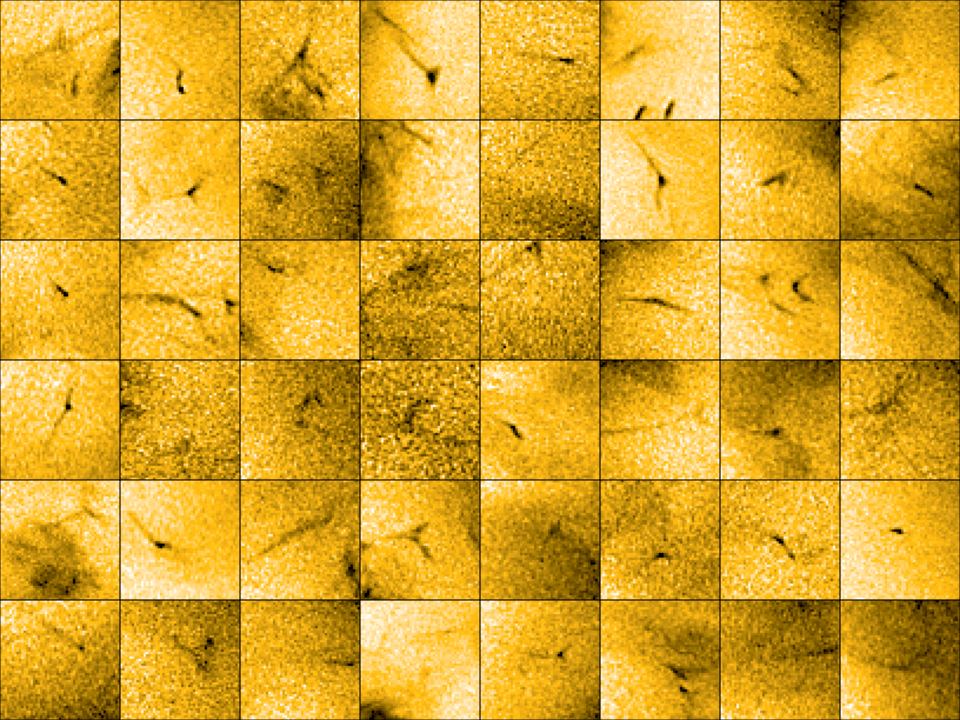
Getting close to things is one way for scientists to collect better data about them. But that's been hard to do for the Sun, since getting close to it typically entails getting burnt to a crisp. Just ask Icarus. But if Icarus had survived his close encounter with the Sun, he might have been able to see massive magnetic “tadpoles” tens of thousands of kilometers wide reconnecting back down to the surface of our star. Or maybe not, because he had human eyes, not the exceptionally sensitive Wide-Field imagers the Parker Solar Probe used to look at the Sun while it made its closest ever pass to our closest star. A new paper in The Astrophysical Journal Letters from Angelos Vourlidas of Johns Hopkins University’s Applied Physics Laboratory and his co-authors describes what they say on humanity’s closest brush with the Sun so far.
None
Or read this on Universe Today