Nanoplastics

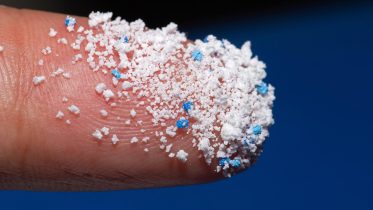
Microplastics are fragments of any type of plastic less than 5 mm (0.20 in) in length, according to the U.S. National Oceanic and Atmospheric Administration (NOAA) and the European Chemicals Agency.

Read more in the app

Nanoplastics have diet-dependent impacts on digestive system health - EurekAlert!

Translocating nanoplastics in zebrafish - EurekAlert!

Chemicals might be hitching a ride on nanoplastics to enter your skin - EurekAlert!

New and simple detection method for nanoplastics. - EurekAlert!

Nanoplastics detection chip revolutionizes plastic pollution monitoring - EurekAlert!

How bad are micro- and nanoplastics for our health? It depends on their concentrations and how you measure them - EurekAlert!

“Shocking” – 27 Million Tons of Nanoplastics Discovered in the North Atlantic

Nanoplastics Make Up Most of the Ocean’s Plastic Pollution

Food packaging is a source of micro- and nanoplastics in food - EurekAlert!

Nanoplastics in the Biosphere: From Molecular Impact to Planetary Crisis — The First Comprehensive Global Report on the Hidden Plastic Catastrophe

Nanoplastics Stick to Toxic Bacteria, Forming a Deadly Combination

Could nanoplastics in the environment turn E. coli into a bigger villain? - EurekAlert!

Could nanoplastics in the environment turn E. coli into a bigger villain?

McGill researchers develop practical new tool for detecting nanoplastics and microplastics in the environment - EurekAlert!

Practical new tool created for detecting nanoplastics and microplastics in the environment

Scientists Develop New Method To Detect Nanoplastics in Body Fluids

New method for detecting nanoplastics in body fluids

New method for detecting nanoplastics in body fluids - EurekAlert!

Nanoplastics in soil: how soil type and pH influence mobility

Nanoplastics in soil: how soil type and pH influence mobility - EurekAlert!