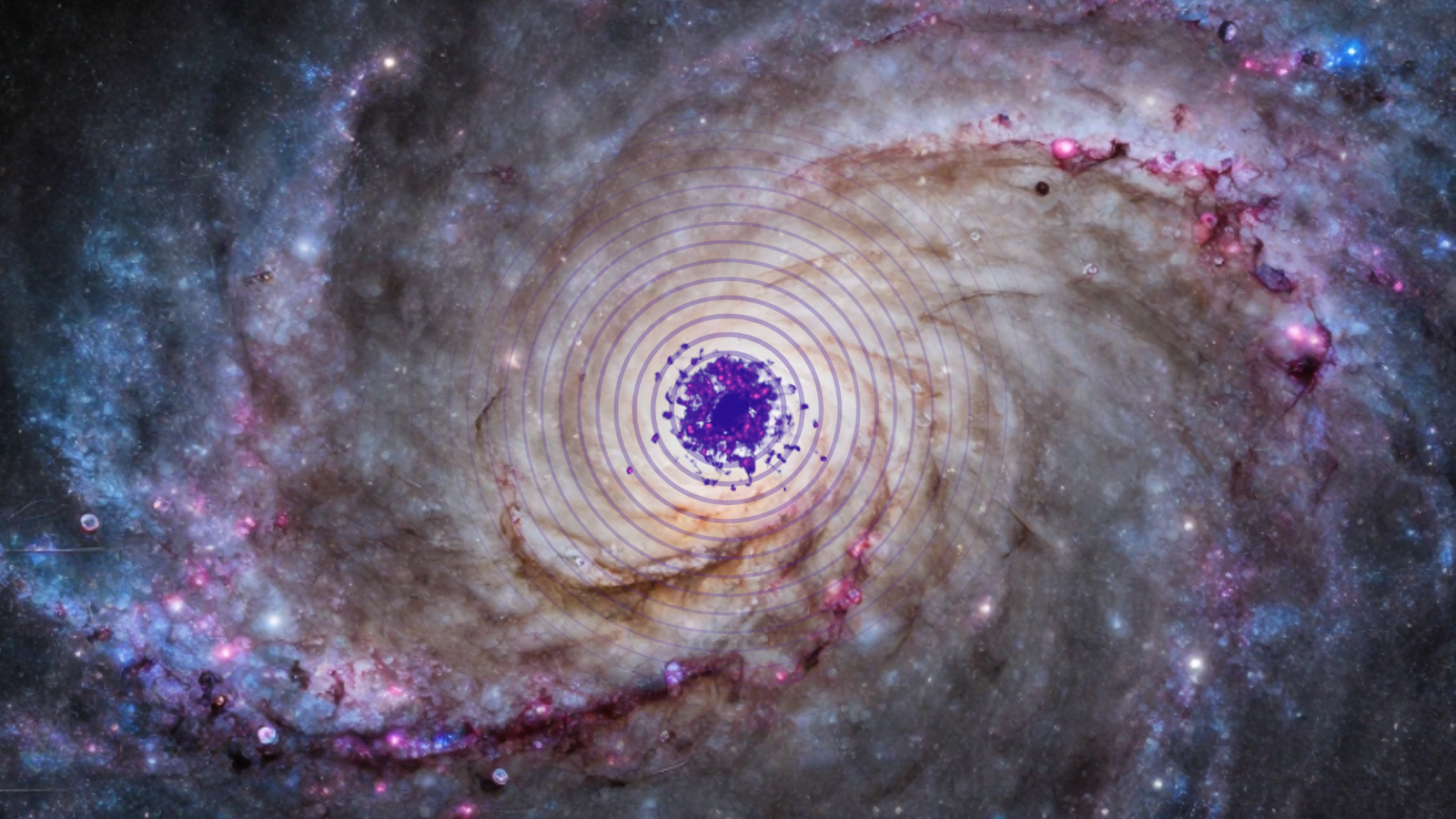
Dark Matter

Dark matter is a hypothetical form of matter thought to account for approximately 85% of the matter in the universe. Dark matter is called "dark" because it does not appear to interact with the electromagnetic field, which means it does not absorb, reflect, or emit electromagnetic radiation and is, therefore, difficult to detect. Various astrophysical observations – including gravitational effects which cannot be explained by currently accepted theories of gravity unless more matter is present than can be seen – imply dark matter's presence. For this reason, most experts think that dark matter is abundant in the universe and has had a strong influence on its structure and evolution. The primary evidence for dark matter comes from calculations showing that many galaxies would behave quite differently if they did not contain a large amount of unseen matter. Some galaxies would not have formed at all and others would not move as they currently do.


Read more in the app

What old, dying stars teach us about axions as a candidate for dark matter

Football-field-sized balloon 24 miles above Antarctica to search for rare cosmic antimatter that could help unlock the mysteries of dark matter

James Webb Space Telescope could illuminate dark matter in a way scientists didn't realize

Dark matter ‘nuggets’ could explain the Milky Way’s mysterious glow

Scientists Map the Invisible Universe, Revealing New Clues About Dark Matter and Dark Energy

Study Finds Galactic Radiation May Be First Direct Evidence of Dark Matter

Decoding dark matter’s imprint on black-hole gravitational waves - EurekAlert!

UChicago astrophysicists test a new piece of the sky to probe dark matter and dark energy - EurekAlert!

Scientists may have found dark matter after 100 years of searching

After a Century of Searching, We May Have Finally Seen Dark Matter

A Chilling Experiment Near Absolute Zero Finds Hints of Dark Matter

Why dark matter is still one of the biggest open problems in science

Study claims to provide first direct evidence of dark matter

After nearly 100 years, scientists may have detected dark matter (awaiting reproducibility now) by University of Tokyo

Dark Matter May Have Finally Been Detected in Our Galaxy's Glow

Scientists have searched for dark matter for decades. One thinks he may have caught a glimpse.

After nearly 100 years, scientists may have detected dark matter - EurekAlert!

After nearly 100 years, scientists may have detected dark matter - EurekAlert!

We might have just seen the first hints of dark matter

In a First for Humanity, Scientists May Have Finally Seen Dark Matter